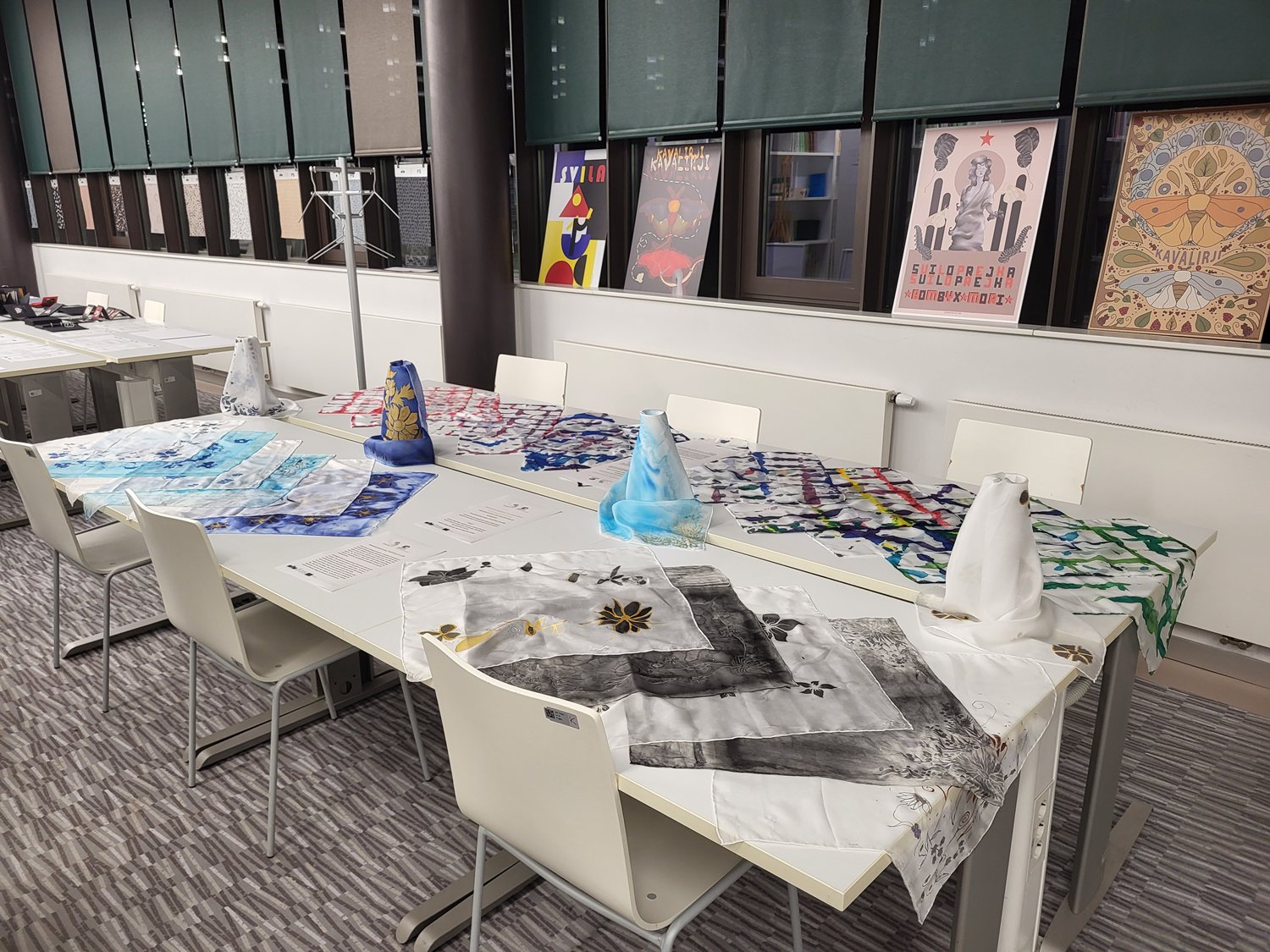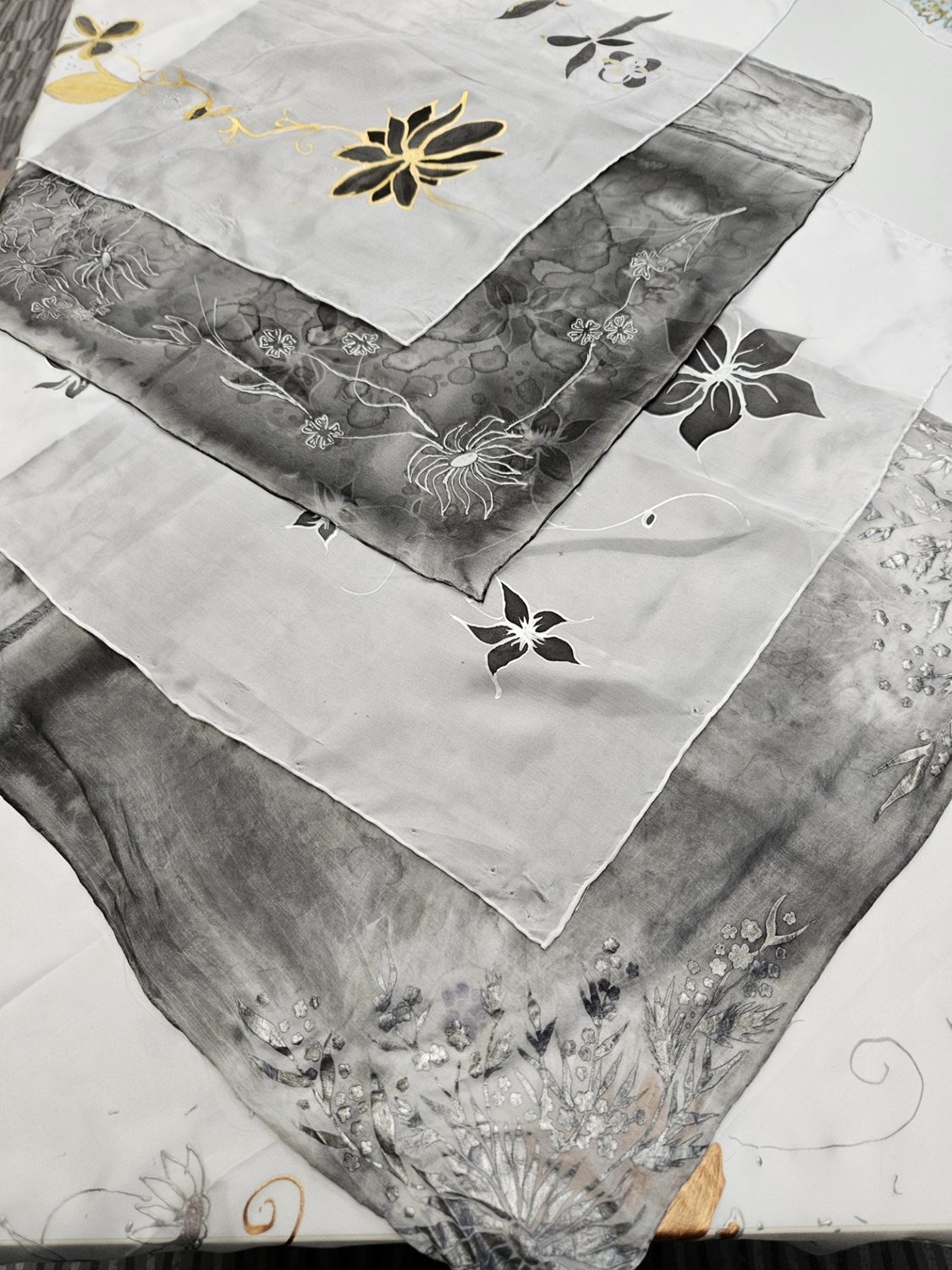
As a starting point, they examined historical silk garments kept in the Maribor Regional Museum. These garments served as inspiration for stylised and adapted motifs used in the shell designs.
Inspiration from historical silk garments:
Woman’s Dress of a woman (1936)
A formal dress made of black silk crepe with a straight, slightly loose fit, long narrow sleeves and a round neckline. It features decorative silk embroidery on the left side – a stylised floral motif that extends from the neckline across the upper part of the dress.
Author: Tailor Ivan Sapač, Maribor (salon on the main square). Embroidery by Zala Levstik (23 March 1936) or Anka Dabinović.
Black dress (1980s)
Two-piece dress in a bustle style, consisting of a pleated skirt and a long cardigan with pleated back and deep rectangular neckline. Made from black taffeta and lace.
Flowered dress (1990s)
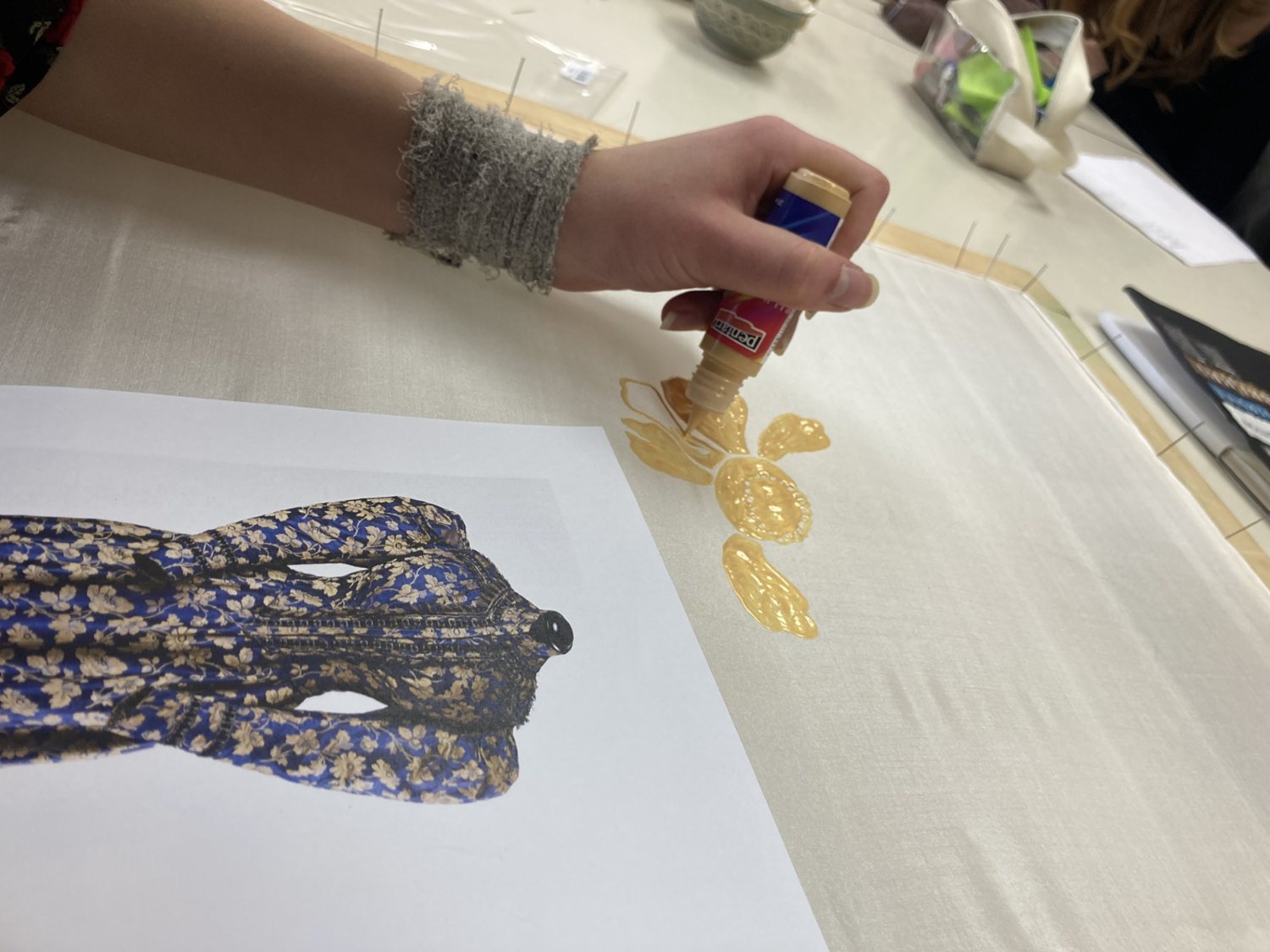
A women’s dress with a short blouse and richly gathered sleeves at the shoulders that taper down to the wrist. There are pleats on the front and a velvet patch made of fabric and dark blue velvet, which also borders the collar and shoulders. The blouse has sewn-in boning and a pointed front. The floor-length skirt is richly pleated. The ensemble reflects bourgeois fashion with elements of traditional costume. Fabric: brocade.
Technique:
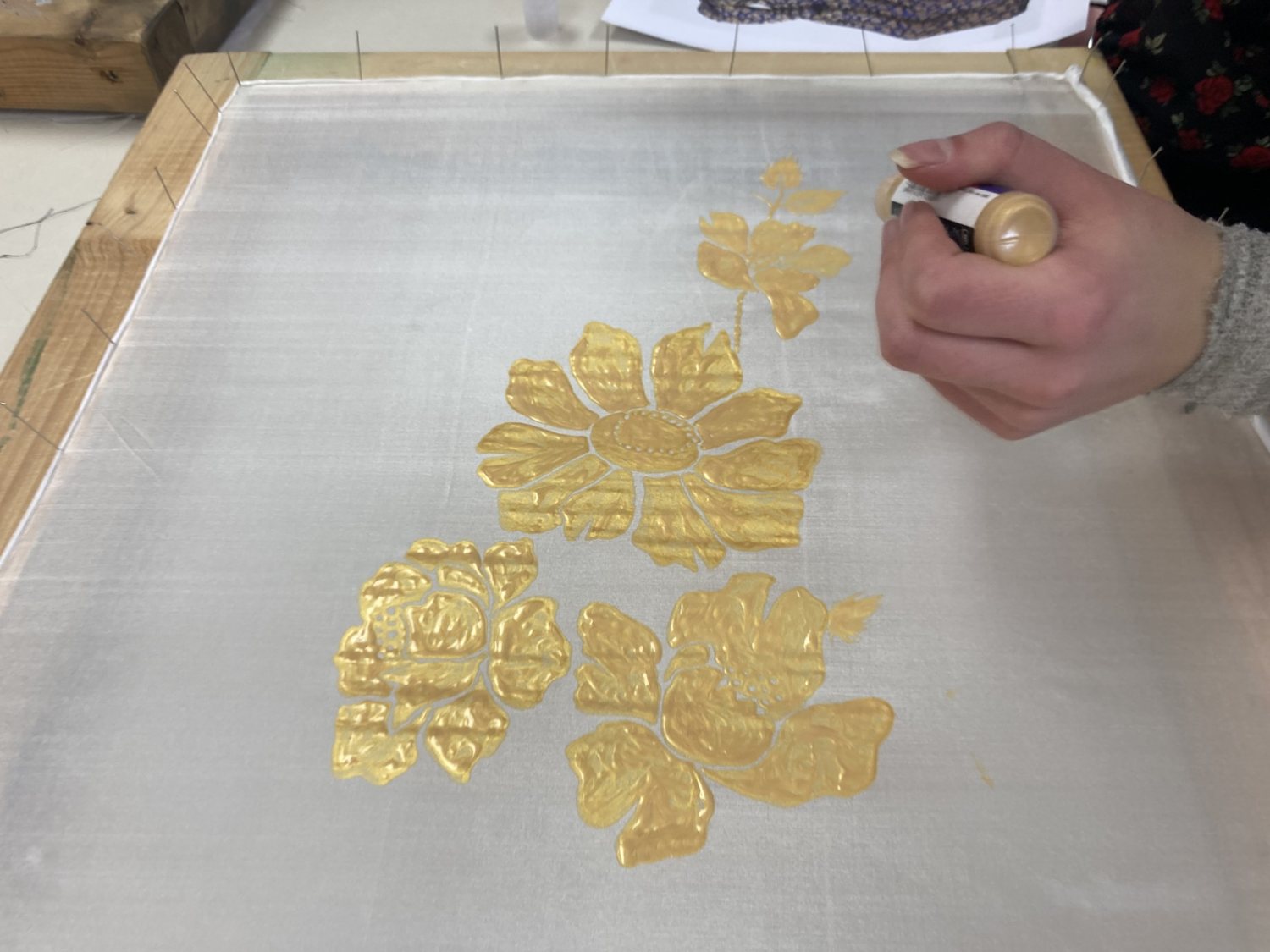
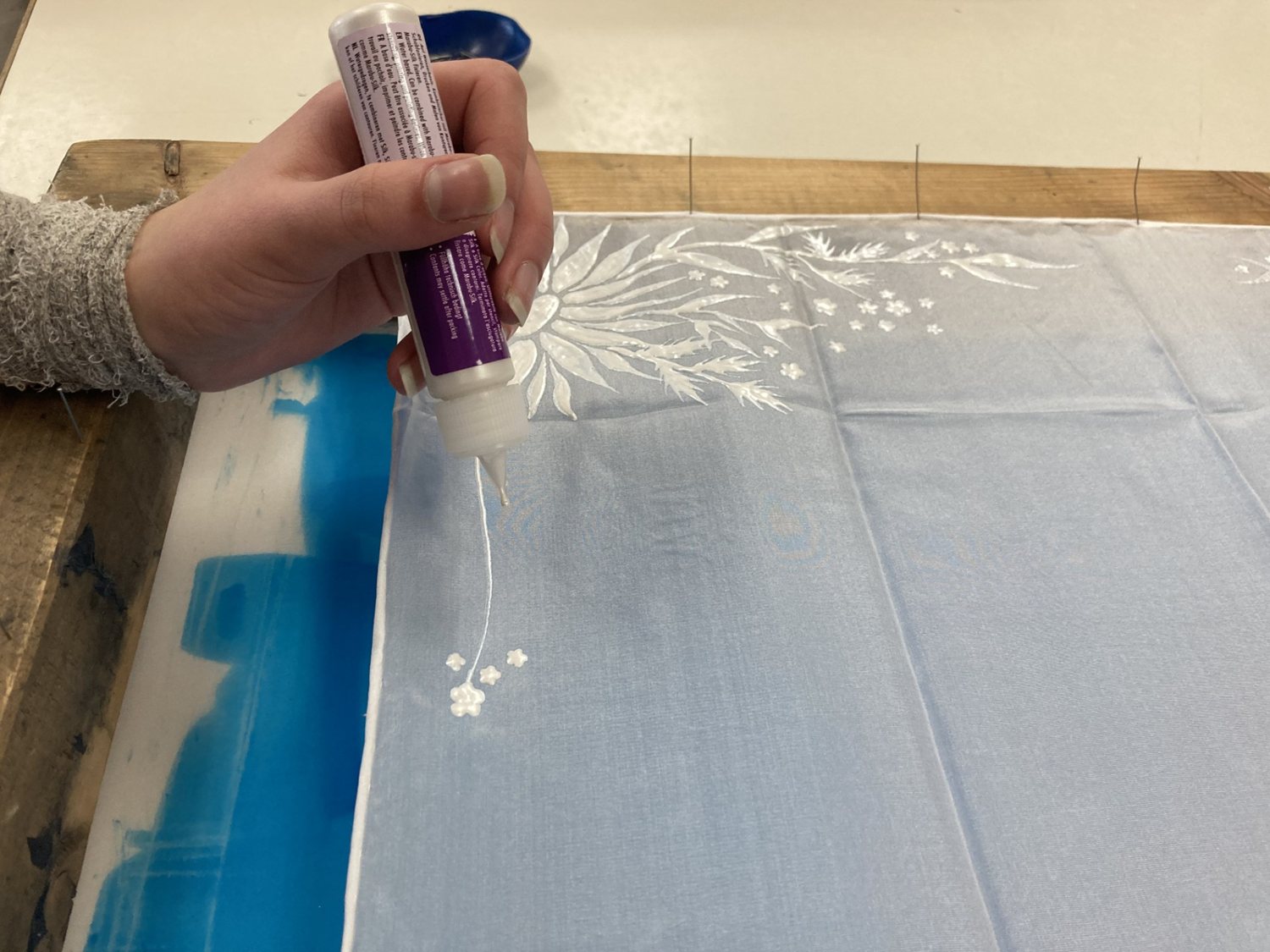
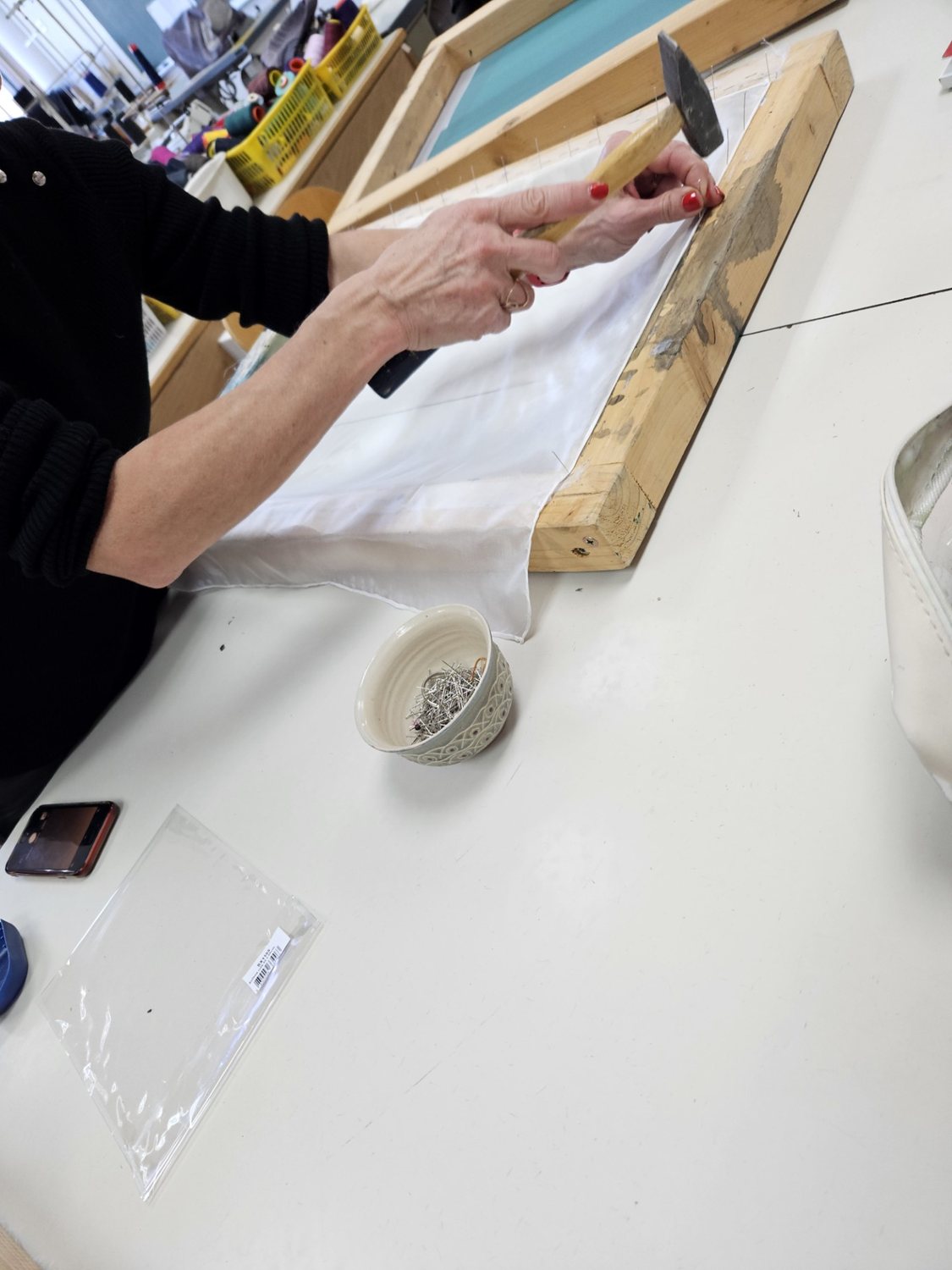
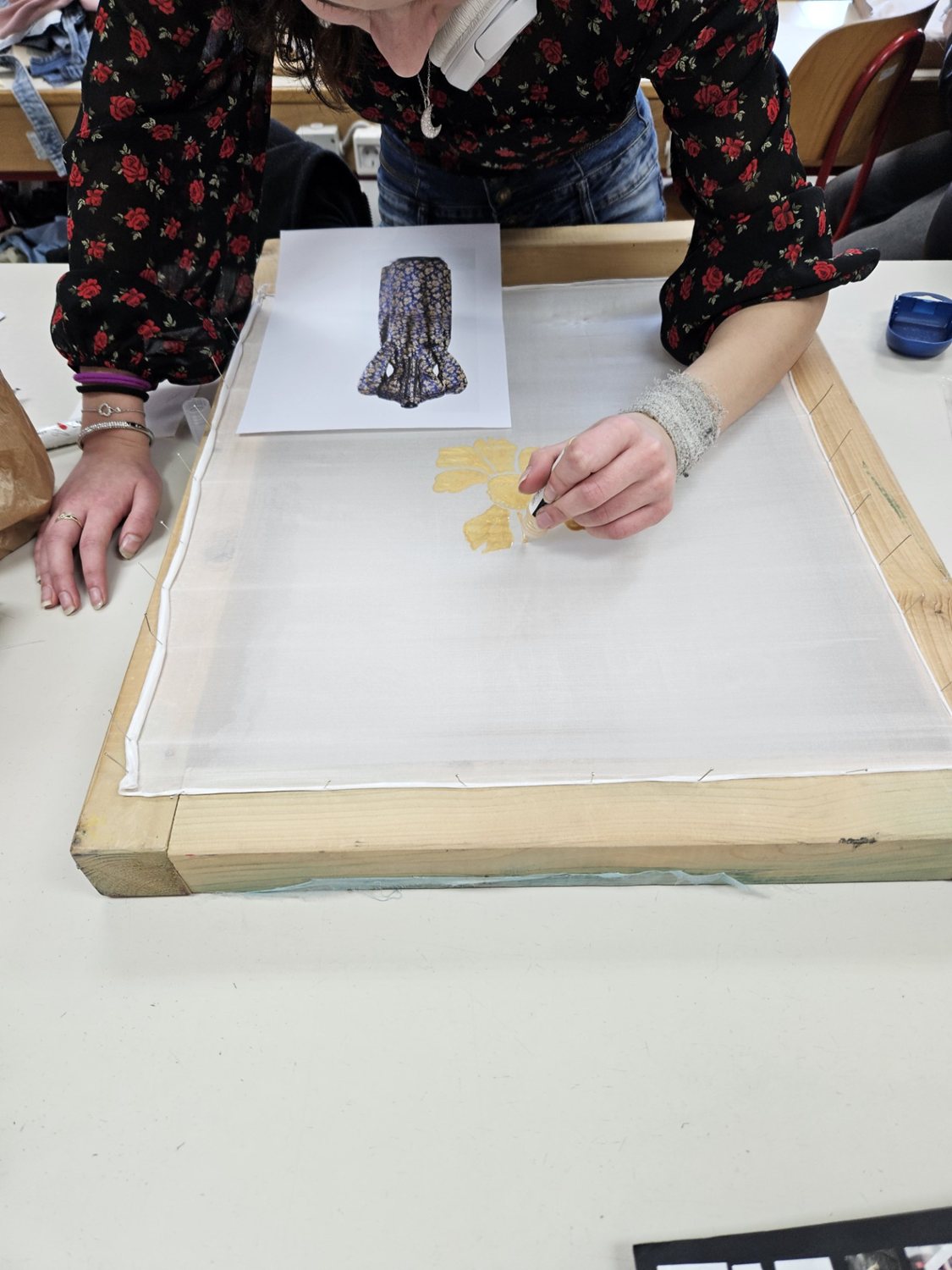
The process began with pencil sketches of shell designs on paper. These were then transferred onto silk, which was stretched onto wooden frames. One challenge was that the scarves were larger than the frames, so they had to be twisted or folded in order to stretch them properly.
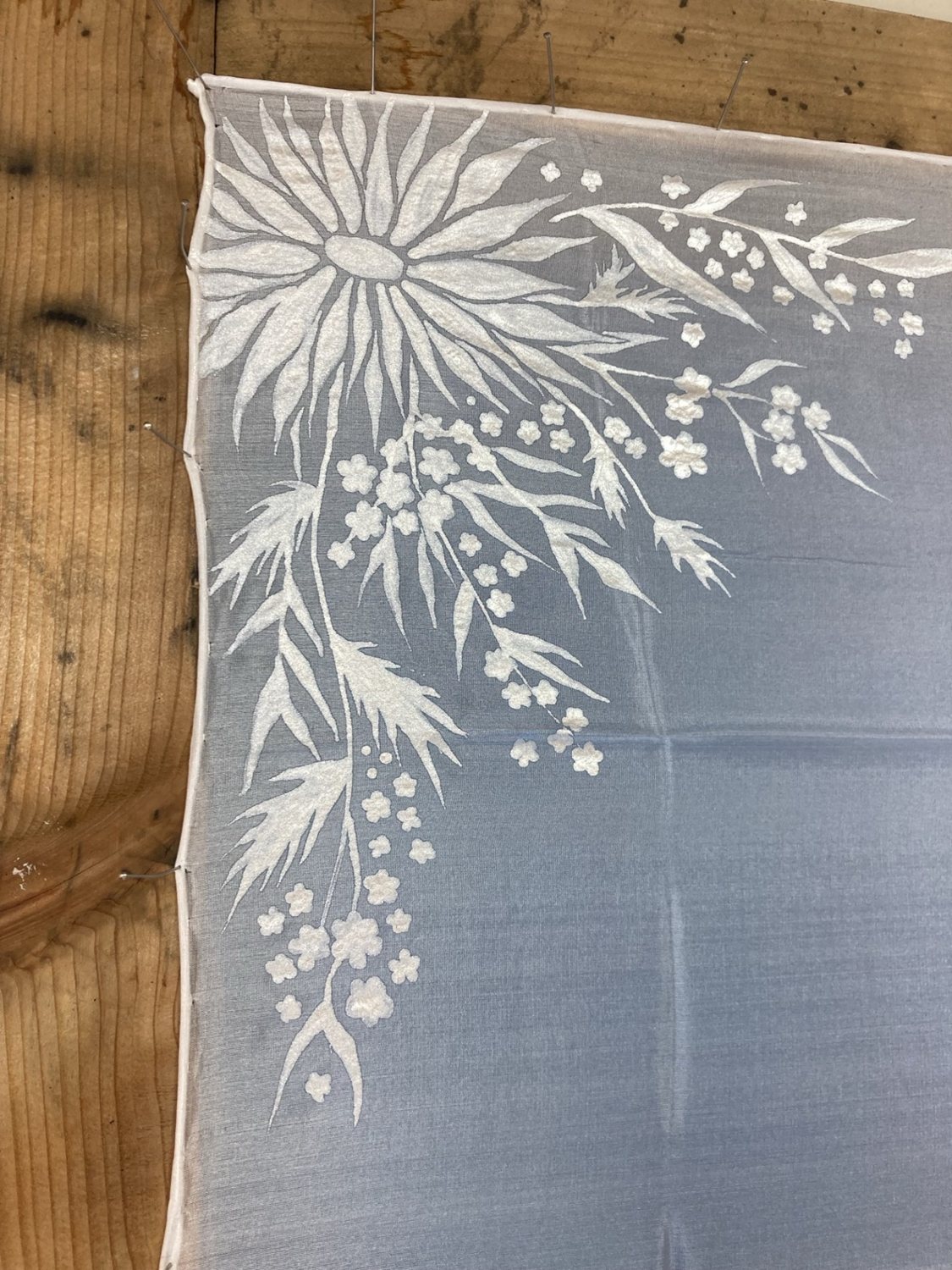
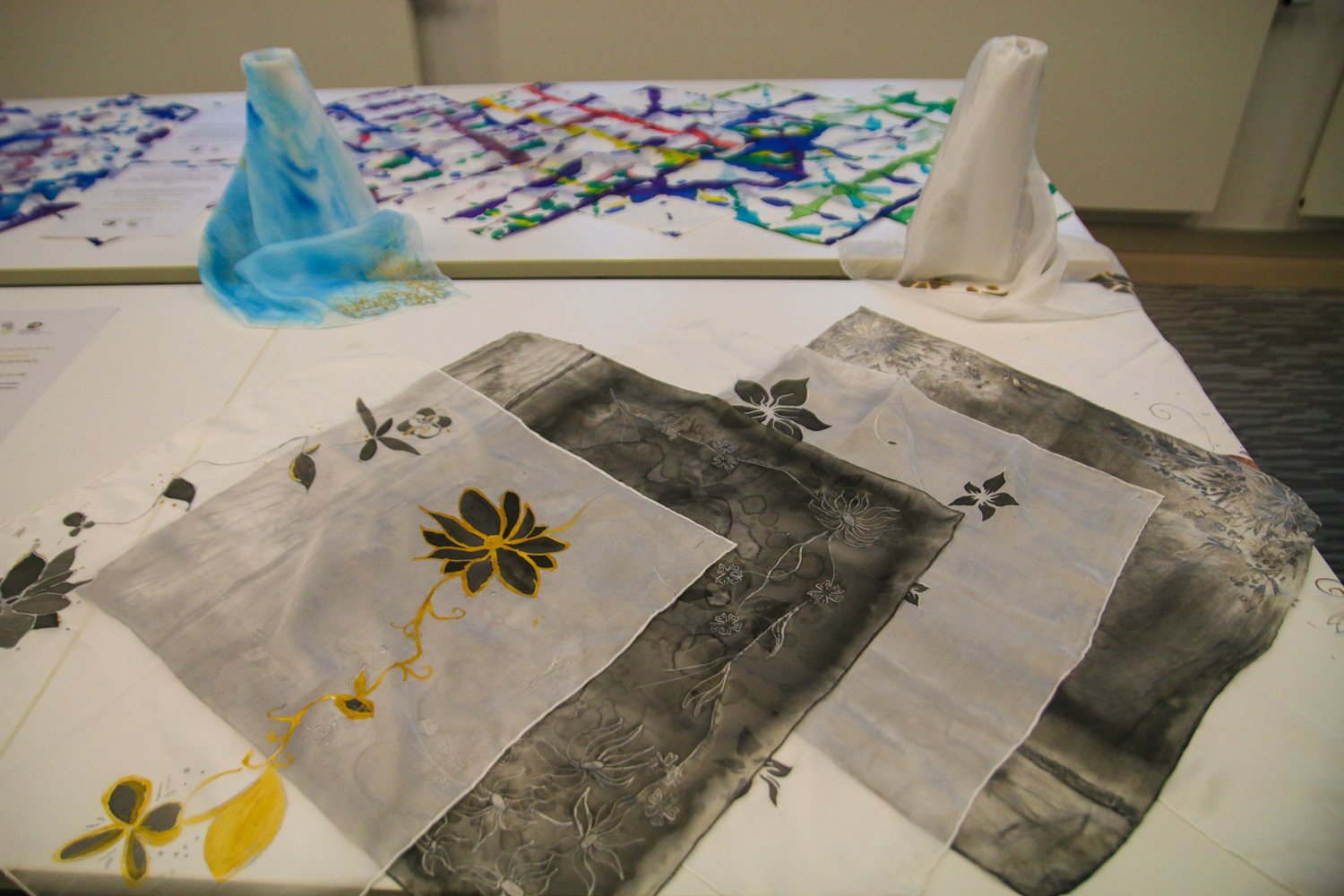
Gutta contour colours were used to outline the motifs. Once the outlines were dry, they painted the backgrounds and the inner floral elements. This was followed by corrections and refinements to the outer contours. The final step was to fix the colours with an iron.
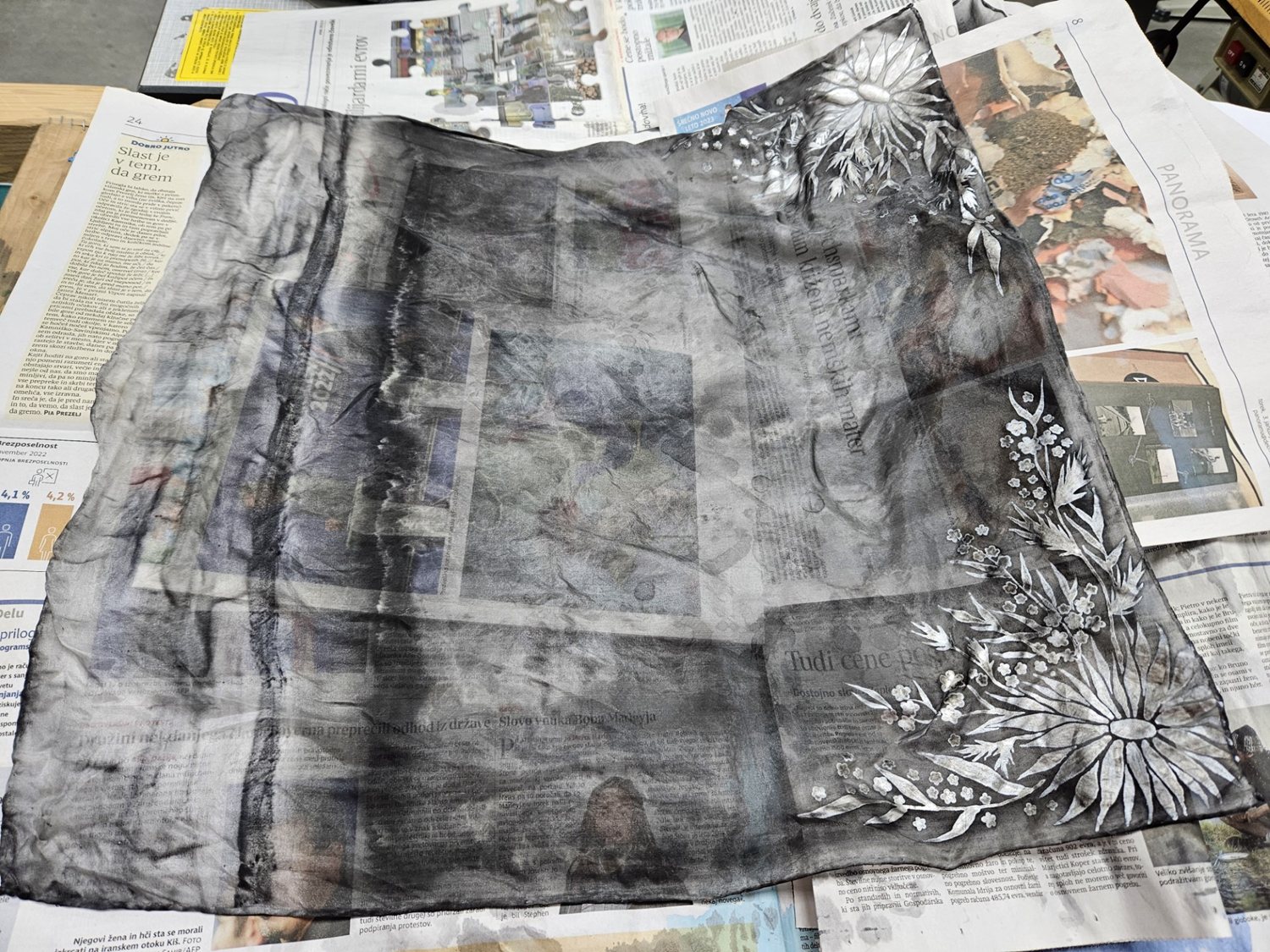
In total, students made 12 silk scarves as part of this project.