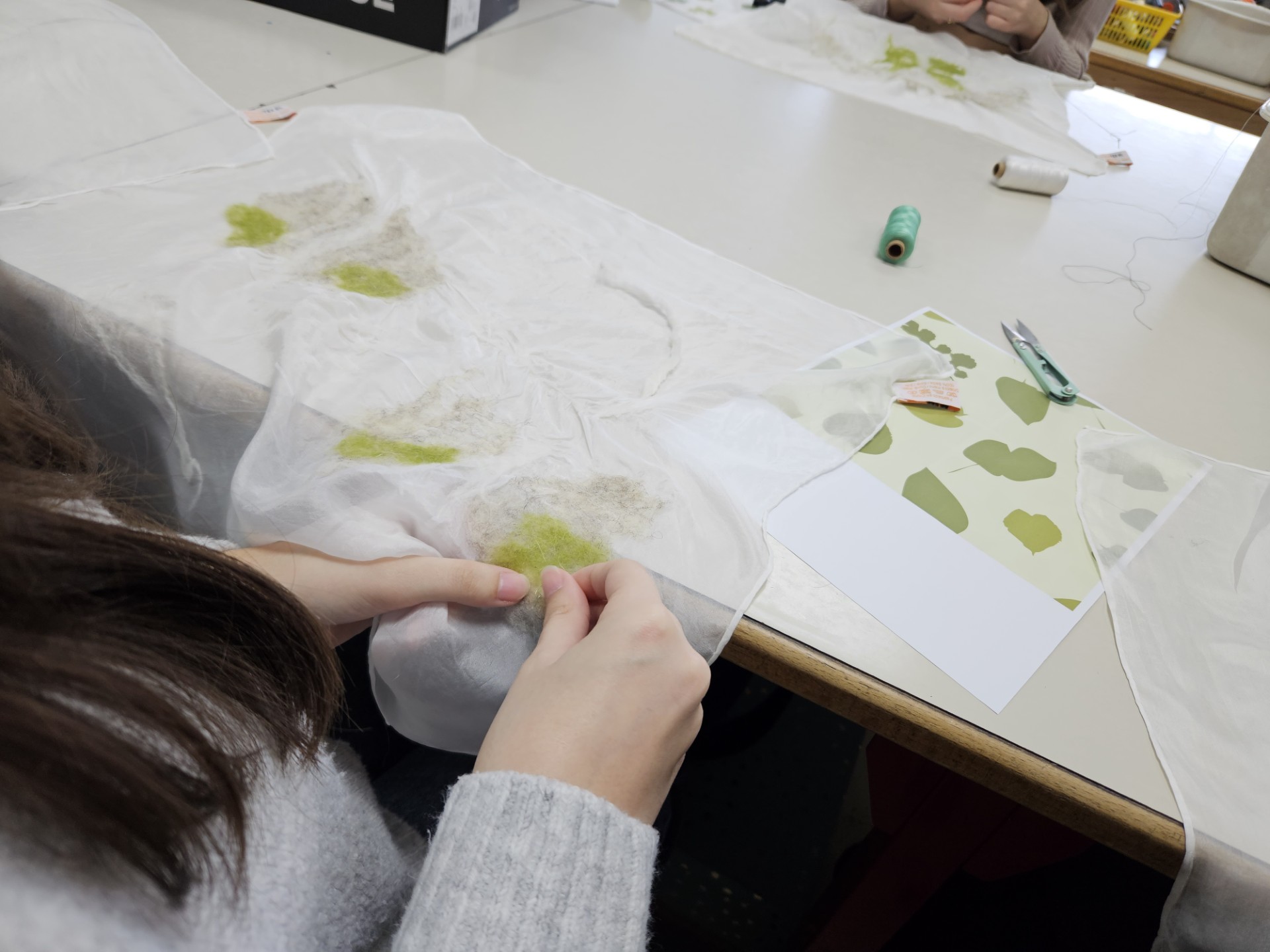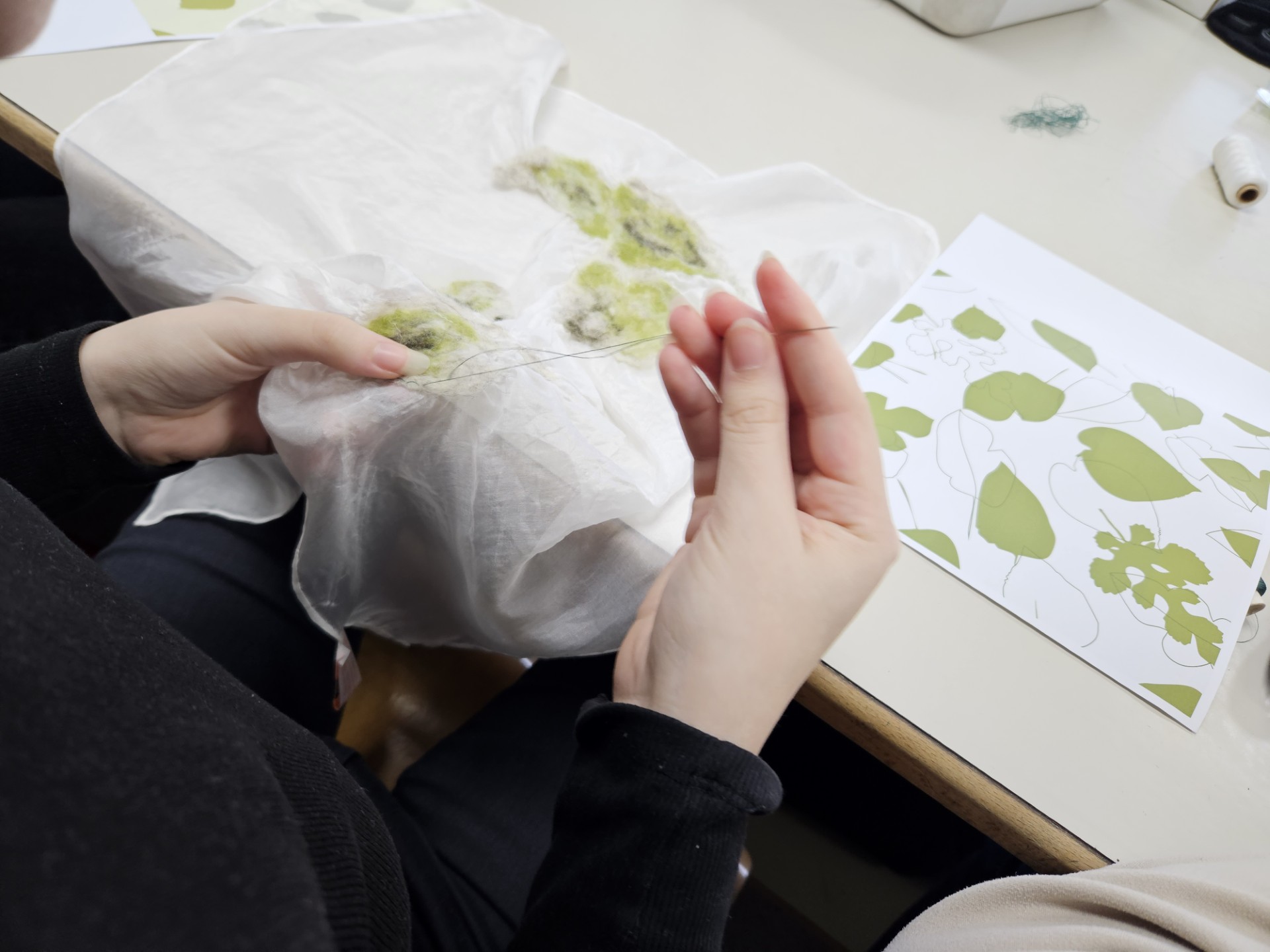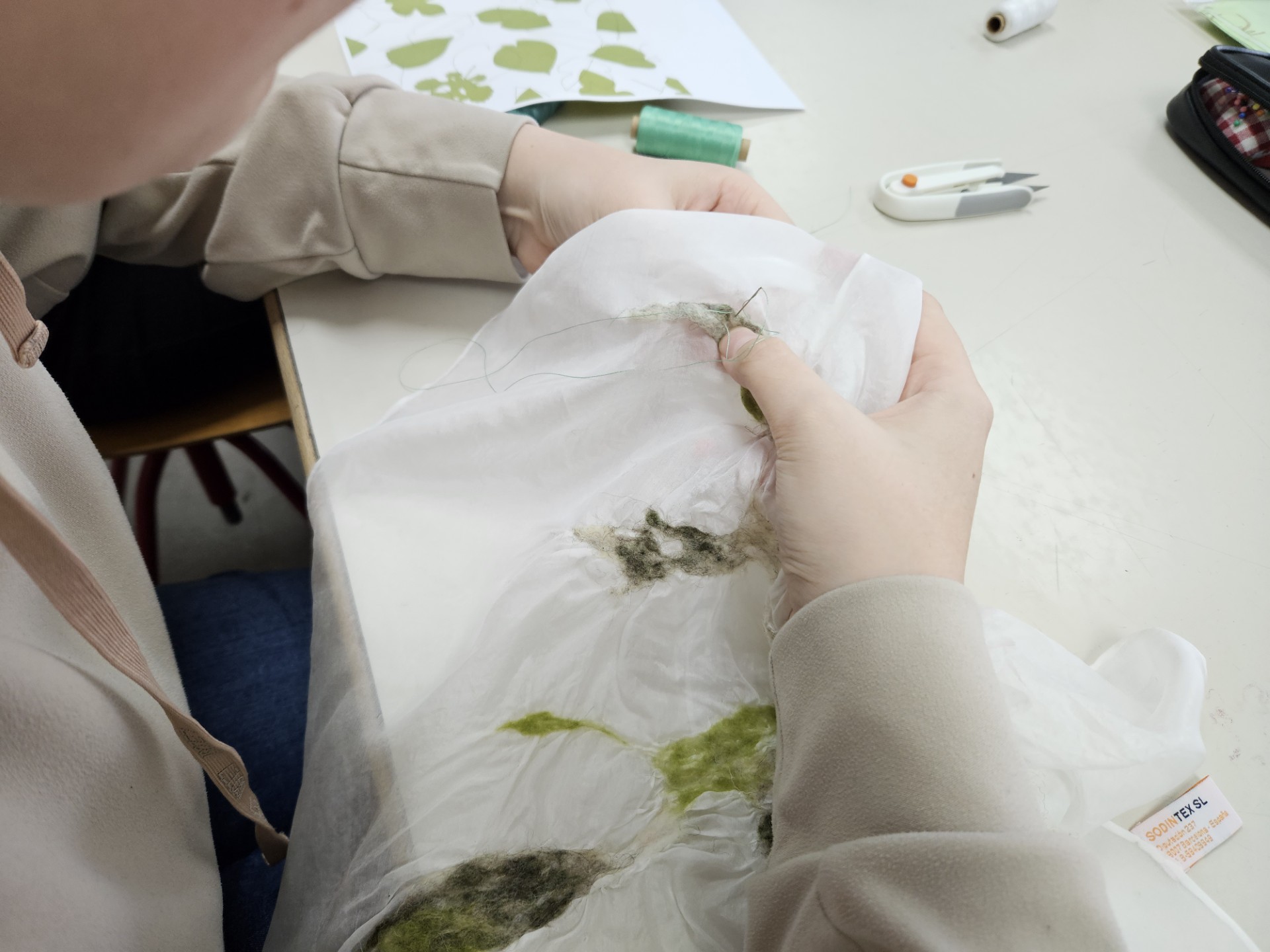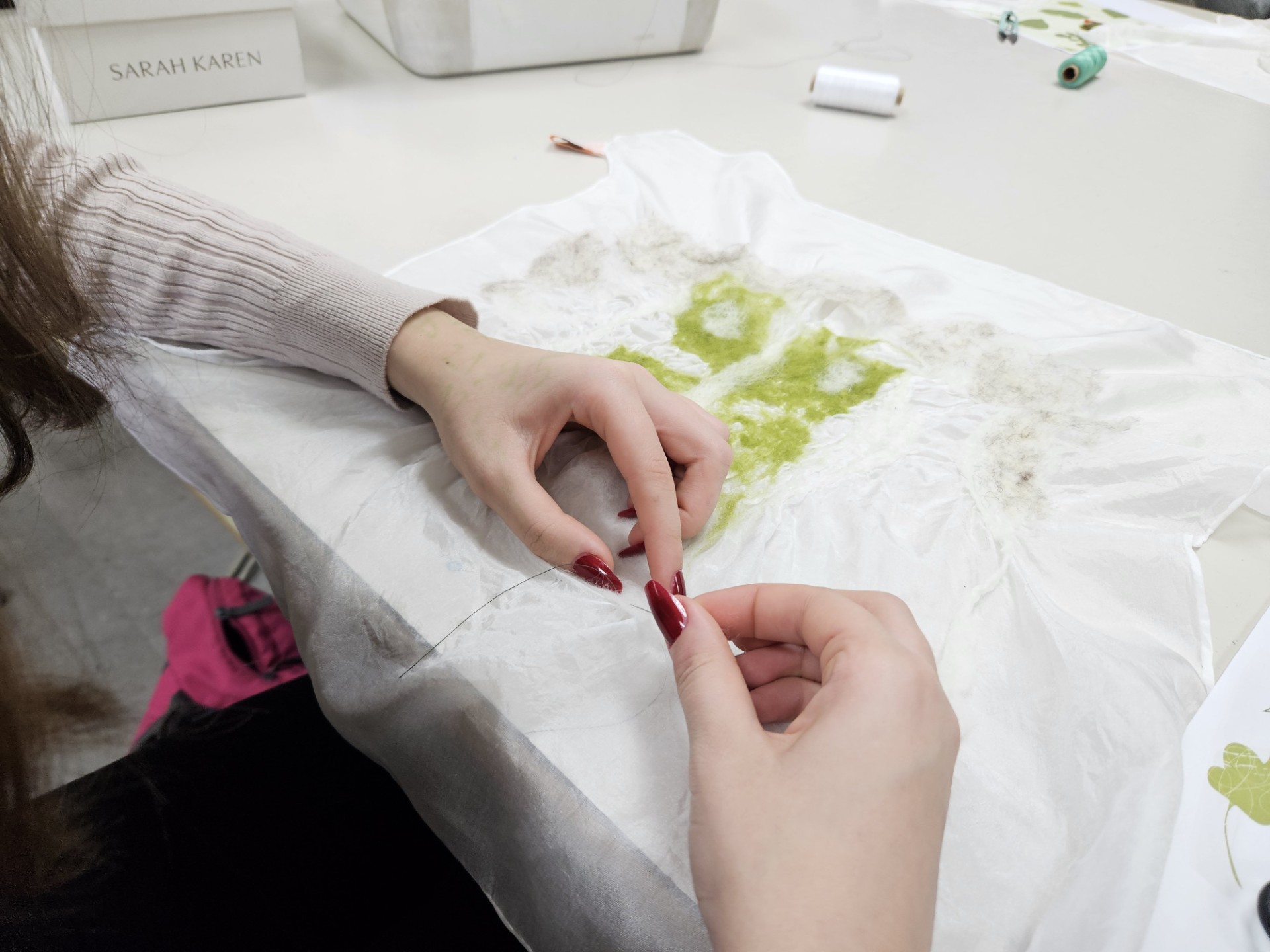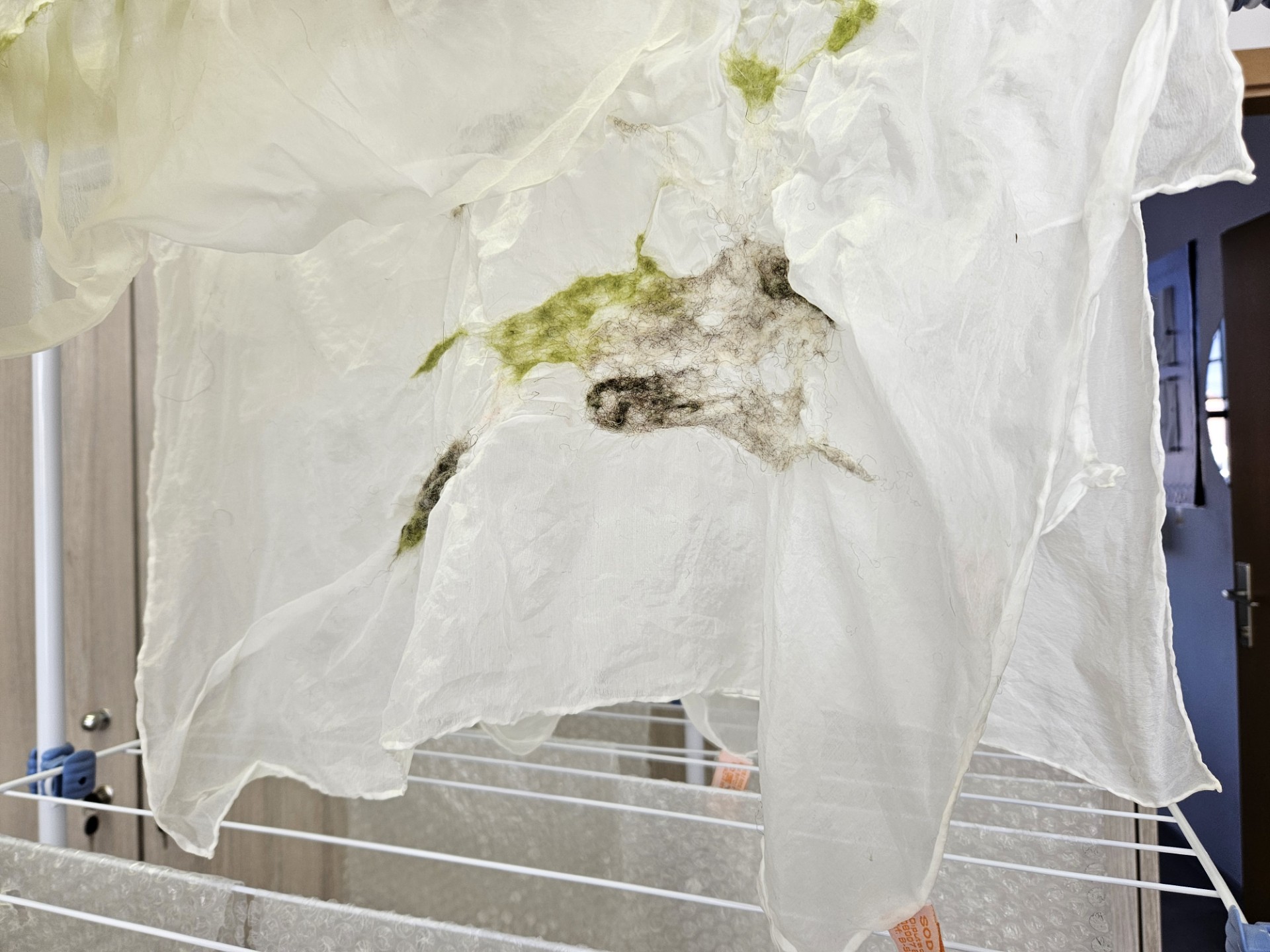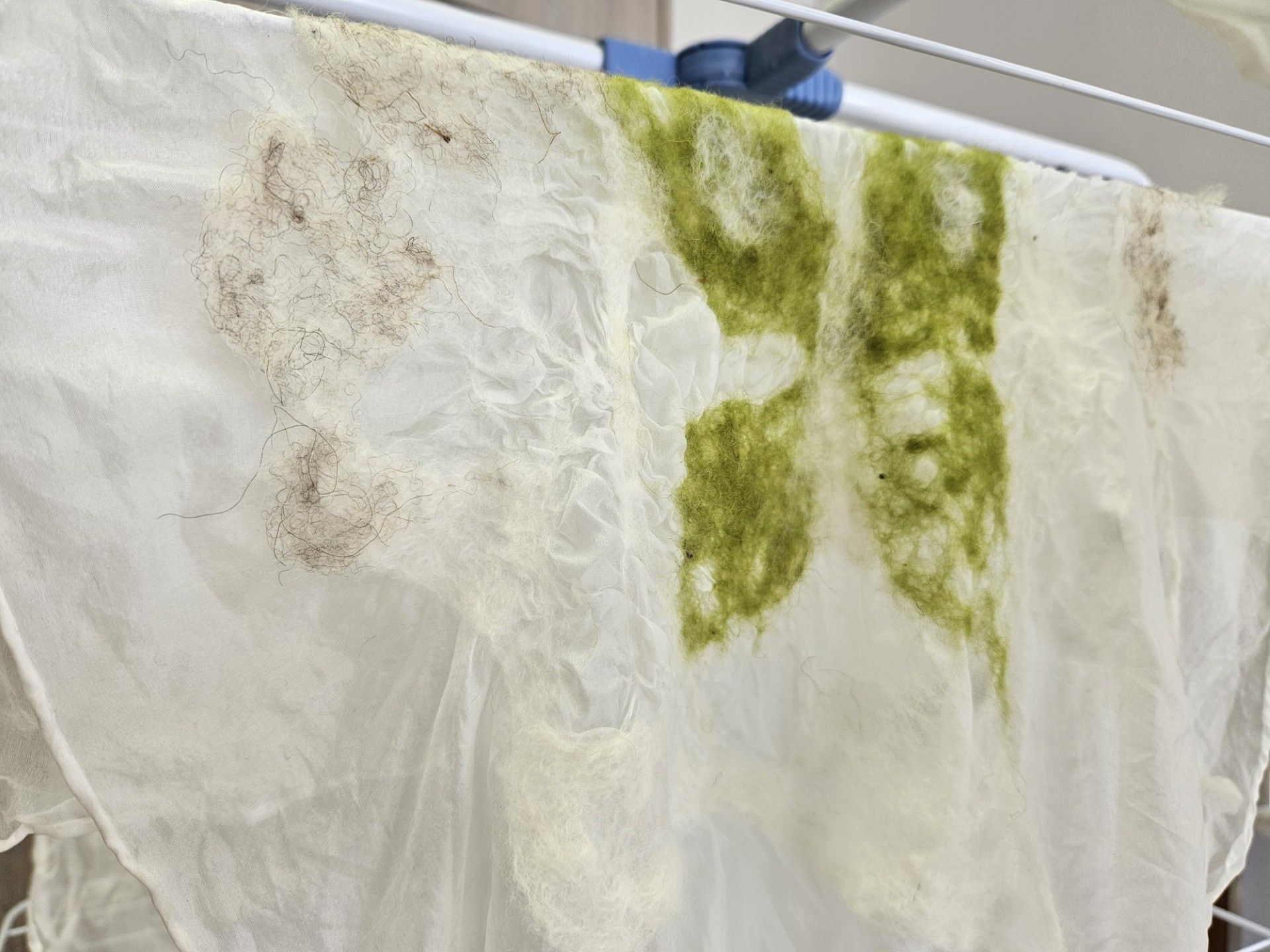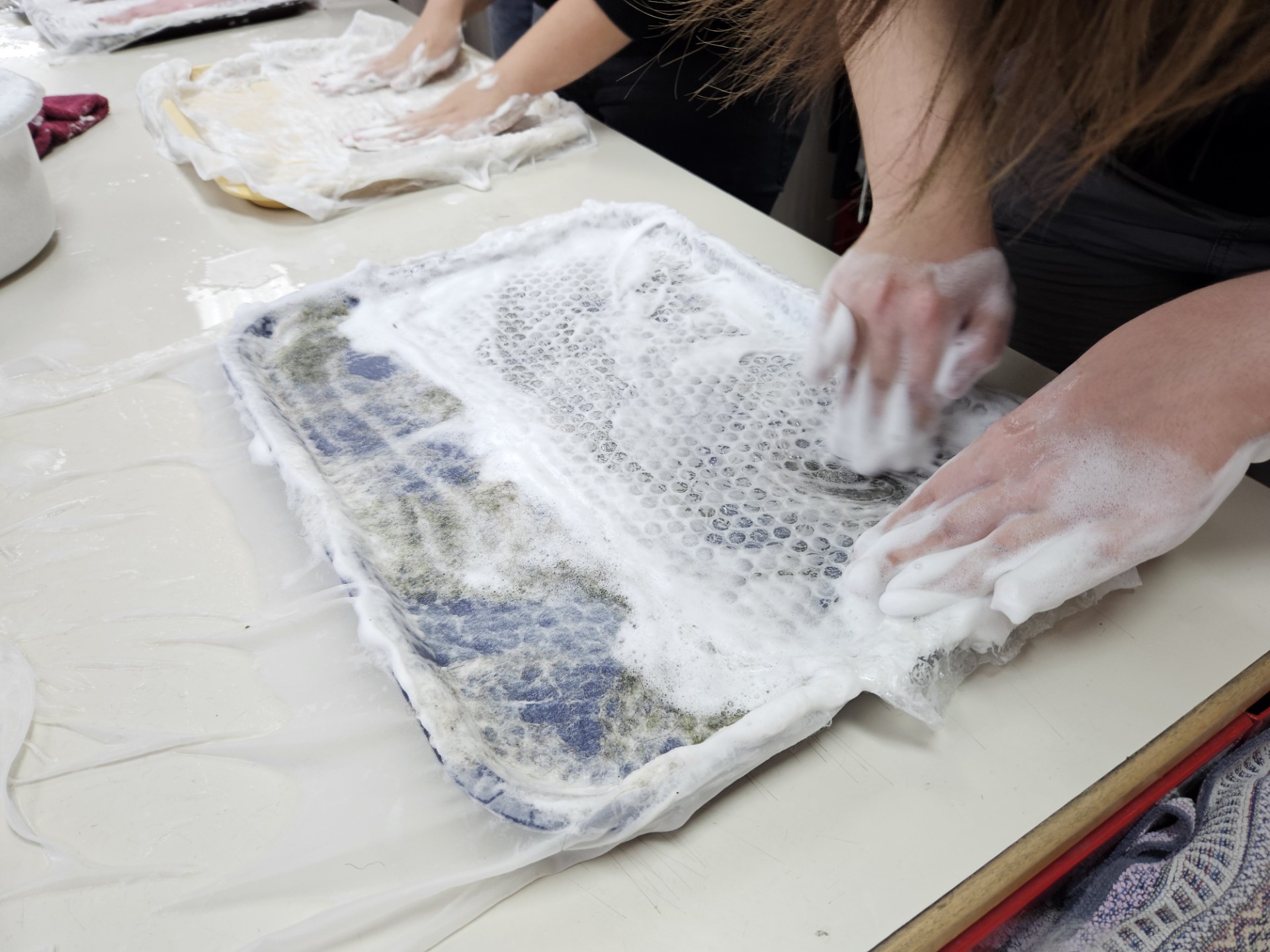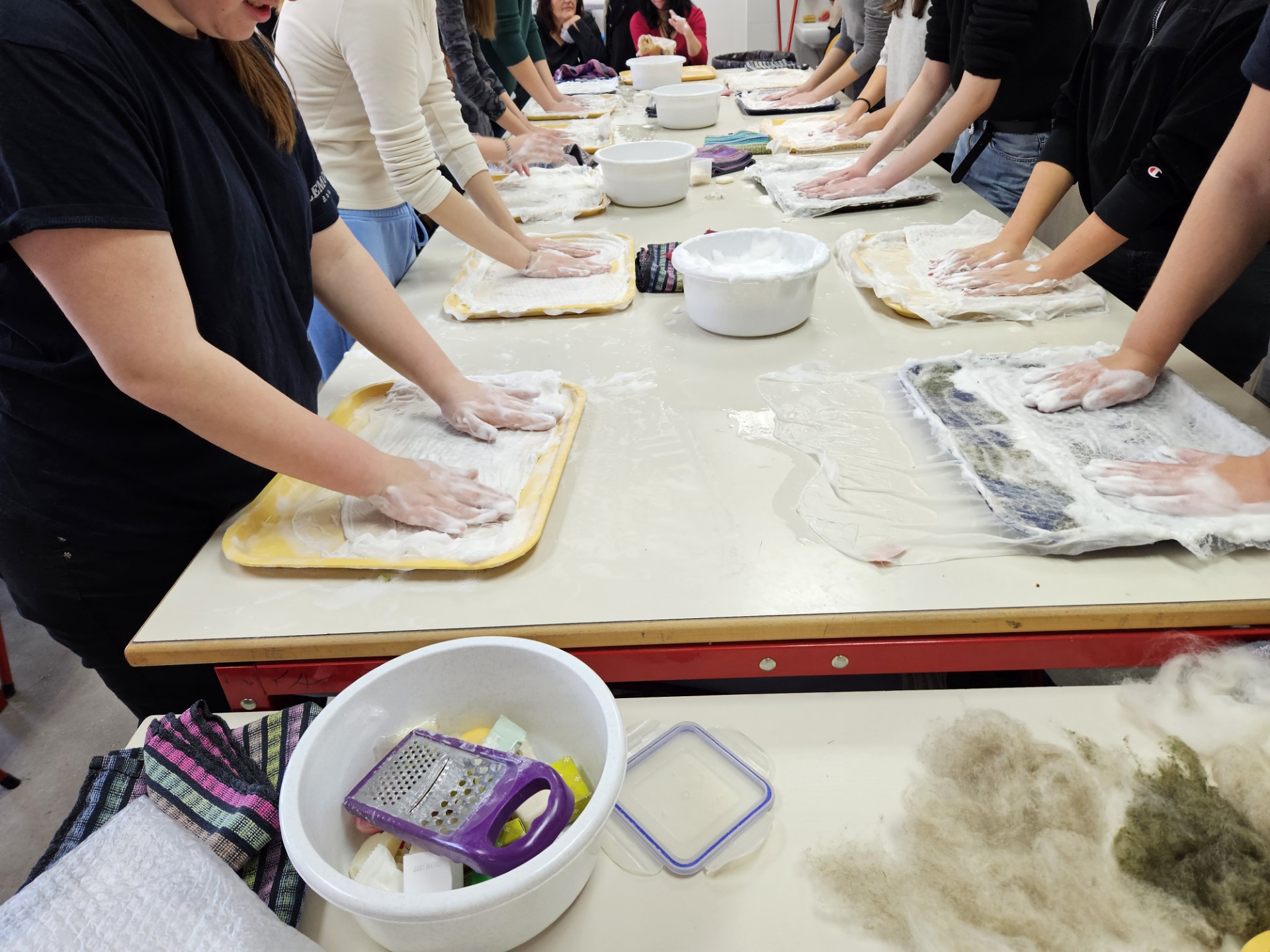
In fashion design, students explore various techniques, including older craft methods that have regained importance, such as felting. This traditional technique involves making fabrics from carded wool, often in combination with silk, to achieve aesthetic and creative effects. The first year students took inspiration from digital patterns created by third year students to transfer silk motifs (moths, mulberry leaves etc.) onto silk scarves through felting. They also embellished the scarves with embroidery to enhance their creations.
Felting, as a sustainable and culturally rich craft, also plays a role in raising awareness about nature preservation and cultural heritage. In addition to sheep’s wool, silk is often combined with felting, as this valuable fiber enhances the aesthetic and creative appeal of the final product.
This unique blend of materials and the rediscovery of traditional techniques inspired first-year Fashion Design students at the Secondary School of Design in Maribor to take part in the Aracne project. Their felting work on silk scarves was based on digital motifs—such as butterflies and mulberry leaves—created by the school’s students. While wet felting naturally softens motif outlines, it also opens space for individual interpretation and imagination.
The students further enriched their creations by embroidering over the felted patterns, adding detail and value to each scarf.